

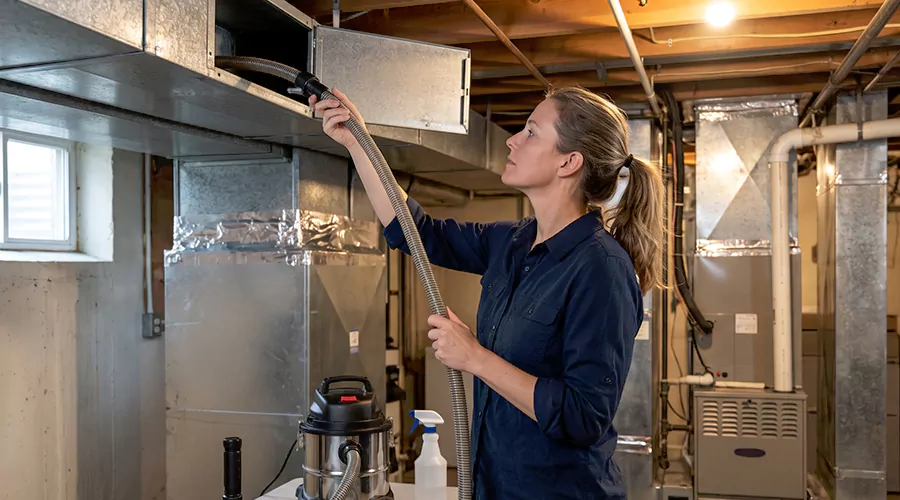
To remove unpleasant odors from HVAC ductwork, identify the source of the smell, inspect the air filter and accessible vents, correct moisture or air leakage problems, and arrange professional cleaning or repairs when significant contamination is present. Musty, smoky, rotten, and chemical odors can have different causes, so the right solution depends on what is producing the smell.
Heating and cooling systems circulate air throughout a home. When unpleasant odors originate inside the equipment, enter through leaky return ducts, or come from indoor activities, airflow can carry those smells into multiple rooms. Properly designed custom HVAC ductwork can help reduce airflow problems and limit unwanted air movement when duct sizing, routing, or connections are contributing to the issue.
Homeowners sometimes assume that every odor requires air duct cleaning. However, a dirty evaporator coil, blocked condensate drain, pest infestation, or damaged duct connection may be responsible. Identifying the cause before choosing a treatment helps prevent recurring odors and unnecessary cleaning expenses.
What Causes Bad Smells From HVAC Ducts?
Odors may originate from the duct interiors, HVAC components, or surrounding building spaces.
| Type of Smell | Possible Cause | Recommended Action |
|---|---|---|
| Musty or damp | Moisture, dirty coil, or wet insulation | Inspect drainage and duct conditions |
| Rotten or decaying | Dead animal or pest contamination | Arrange pest and HVAC inspection |
| Burning | Electrical, motor, or heating problem | Stop equipment and request service |
| Smoky | Indoor smoke or fire-related contamination | Remove source and inspect system |
| Chemical | Household products or HVAC treatments | Identify product and exposure source |
| Sewage-like | Drainage or trap problem | Inspect condensate and plumbing |
| Dusty | Deposits near registers or HVAC components | Inspect filter and accessible areas |
| Rotten eggs or sulfur | Possible natural gas leak | Evacuate and contact emergency services |
Odor descriptions are not a reliable diagnosis. A technician may need to inspect several locations before identifying the source.
1. Replace Dirty or Contaminated HVAC Filters
A dirty filter can hold dust and other particles that contribute to unpleasant smells. Inspect the filter and replace it according to the equipment manufacturer's instructions. A wet filter requires additional attention because moisture should not accumulate in ordinary filter media. If a replacement filter quickly becomes damp or contaminated, investigate the underlying problem rather than repeatedly replacing it.
2. Inspect the Evaporator Coil
The evaporator coil cools indoor air and removes moisture during air conditioning operation. Dust and organic deposits can collect on its damp surfaces, potentially contributing to musty odors.
The Environmental Protection Agency (EPA) recommends inspecting cooling coils and nearby components for cleanliness and moisture problems. A qualified HVAC technician can examine the coil and clean it using procedures appropriate for the equipment. Do not spray household cleaners into the equipment cabinet.
3. Clean and Repair Condensate Drainage
Condensation from the cooling coil normally collects in a drain pan and exits through a condensate line. A blocked drain can leave standing water, which may contribute to unpleasant odors. The EPA recommends maintaining clean drain pans and keeping condensate lines clear.
The contractor should also check the drain trap. An improperly configured or dried-out trap can sometimes allow odors from connected drainage systems to enter the air handler. Persistent drainage problems should be repaired before normal operation continues.
4. Investigate Moisture Inside Air Ducts
Water may enter ductwork through roof leaks, damaged insulation, condensation, or improperly sealed connections. When porous materials remain damp, they may develop odors and contamination. The EPA advises that wet or moldy fiberglass duct insulation cannot be effectively cleaned and should be replaced.
A contractor should inspect the affected sections and correct the moisture source. Simply spraying a deodorizer into the duct will not stop odors caused by recurring water damage.
5. Check for Rodent or Pest Activity
A strong decaying smell may indicate a dead animal or accumulated pest waste. Rodents can enter damaged ducts or surrounding building cavities through small openings. The Centers for Disease Control and Prevention recommends professional rodent removal when pests have accessed HVAC ventilation systems.
Do not vacuum or sweep dry rodent droppings because contaminated particles can become airborne. After professional pest removal, affected ductwork may require controlled cleaning or replacement. The original entry points should also be sealed.
6. Repair Leaking Return Air Ducts
Return ducts carry indoor air back to the HVAC equipment. When their connections leak, they may draw air from attics, basements, crawlspaces, and other unintended areas. Odors from these spaces can then enter the circulation system.
ENERGY STAR recommends sealing suitable duct connections with approved mastic or metal tape. A contractor should inspect the return system for disconnected joints and damaged sections. Air duct cleaning alone will not correct an odor caused by outside air entering through a leak.
7. Address Smoke and Cooking Odors
Tobacco smoke, cooking emissions, fireplaces, and other household activities can introduce odors into indoor air. These smells may become noticeable at supply registers because the HVAC system recirculates room air. The EPA recommends controlling pollution at its source and using appropriate ventilation.
Clean affected household surfaces and maintain suitable HVAC filtration. After significant fire or smoke damage, professional assessment may be needed to determine whether duct components are contaminated.
How to Remove HVAC Duct Odors Step by Step?
Step 1. Identify the Odor
Determine whether the smell is musty, smoky, decaying, or chemical-like. Note when it appears and which rooms are affected.
Step 2. Check for Immediate Safety Concerns
If you smell rotten eggs or suspect a gas leak, evacuate immediately. Avoid electrical switches and ignition sources, then contact emergency services or the gas utility from outside. For smoke or a strong burning odor, stop equipment operation if safe and seek urgent professional assistance.
Step 3. Inspect the Air Filter
Replace a dirty filter with a compatible product. Check for unusual moisture or visible contamination.
Step 4. Look for Water Problems
Inspect safely accessible areas around the indoor HVAC equipment for standing water or staining. Do not open electrical cabinets or enter unsafe attic spaces.
Step 5. Check Registers and Returns
Look for obvious debris, damaged grilles, and signs of moisture around accessible openings. A musty smell near one vent may indicate a localized problem.
Step 6. Schedule Professional HVAC Inspection
Ask the technician to assess the coil, drain pan, duct connections, and suspected contamination. Additional pest or plumbing inspections may be necessary.
Step 7. Correct the Source
Repair drainage problems, remove contamination appropriately, or replace damaged duct materials. If return leakage is responsible, seal the affected connections.
Step 8. Verify the Results
After repairs, operate the system under appropriate conditions and determine whether the odor returns. If it does, further investigation may be needed outside the HVAC system.
Can Professional Air Duct Cleaning Remove Bad Odors?
Professional cleaning may help when the duct network contains substantial contamination responsible for the smell.
The National Air Duct Cleaners Association recognizes confirmed unacceptable odors originating from HVAC components as one condition that can justify cleaning. Professional HVAC duct cleaning can help remove odor-causing debris and accumulated contaminants from ductwork when an inspection confirms that cleaning is appropriate.
However, the EPA does not recommend cleaning residential ducts automatically. The contractor should explain which components are contaminated and how cleaning will address the problem. Damaged porous materials or unresolved moisture problems may require additional work.
Should You Spray Deodorizer or Disinfectant Into Air Vents?
Avoid spraying household fragrance, bleach, or disinfectant into HVAC ducts as an improvised odor treatment. Chemical products may be unsuitable for duct materials and can enter occupied rooms through the airflow system. The EPA advises caution with chemical biocides used inside residential ducts because their effectiveness and potential effects have not been fully established.
The agency also warns against relying on ozone generators for indoor air cleaning. Removing the odor source is preferable to masking it with another chemical.
How Can You Prevent HVAC Odors From Returning?
Regular maintenance and moisture control can reduce recurring smells. Replace filters as directed and keep registers unobstructed. Have cooling coils and condensate drains inspected during appropriate HVAC maintenance. Repair plumbing leaks and water-damaged insulation promptly.
Seal significant duct leaks and prevent pest entry. If odors develop after renovations, inspect affected HVAC components for construction debris. A recurring smell should prompt investigation rather than repeated fragrance treatments.
Conclusion
Removing unpleasant odors from HVAC ductwork begins with finding the source. Dirty cooling coils, standing condensate, damp insulation, pest contamination, smoke, and return duct leaks can all contribute. Professional duct cleaning may be appropriate when significant contamination is confirmed, but it cannot replace moisture repairs, pest removal, or damaged duct replacement. Correcting the underlying problem and maintaining the HVAC system provide the best chance of preventing odors from returning.